Journal · Care
Hot Pans, Cold Truths: What a Stone Dining Table Can and Cannot Take
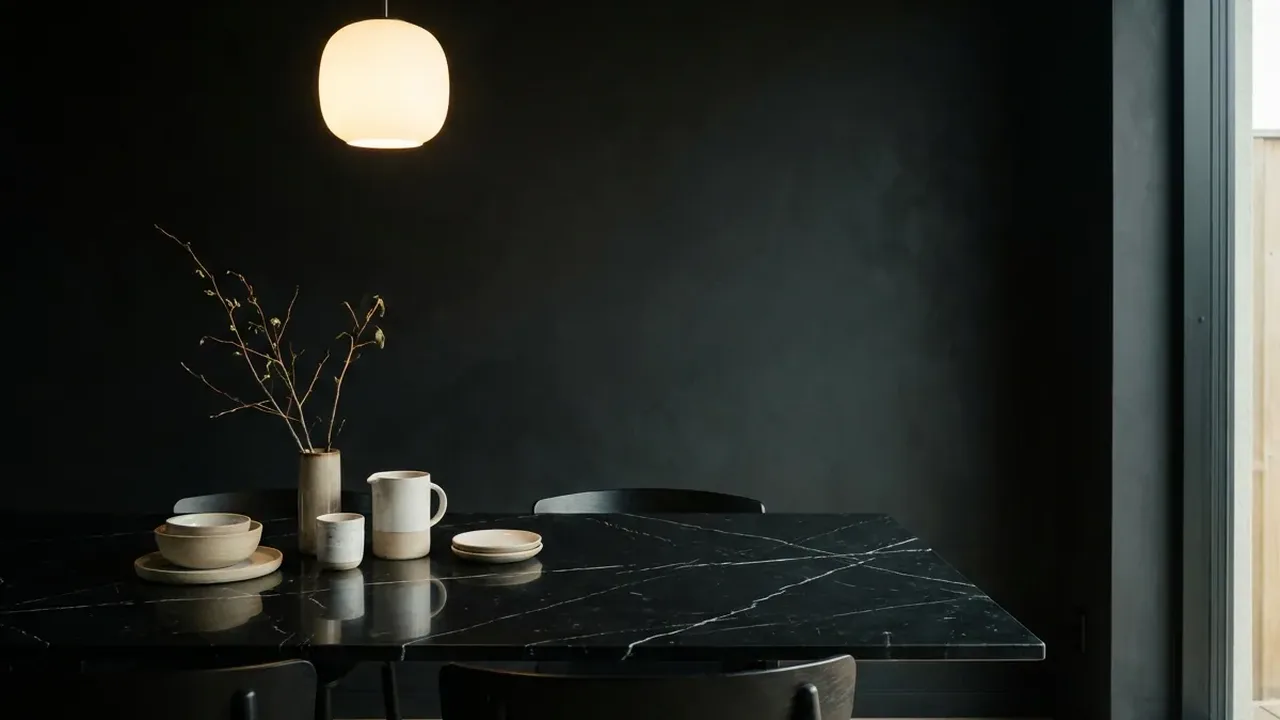
It is the question we hear most often once someone falls for a stone dining table: can we actually eat on it? The honest answer is yes — families have eaten off stone for centuries — but stone is not a laminate, and it rewards knowing what it shrugs off and what it remembers. Here is the truthful map.
Heat: tougher than you think, with one caveat
Stone is born of heat and pressure; a warm serving dish will not trouble it. The caveat is not the stone but the sealer — the invisible protective layer on the surface. A pan straight off the flame can degrade the sealer at that spot, and very sudden temperature extremes are unkind to any natural material. So use a trivet — not out of fear, but the way you would use a coaster on wood: a two-second habit that keeps the protection intact.
Acids: the one thing marble truly remembers
This is the honest heart of the matter. Lemon, vinegar, wine, tamarind — acids react with marble and leave a dull mark called an etch. It is not a stain and it does not wash off — as our care guide puts it, no amount of cleaning removes it. Only professional re-finishing can. Etches show most on dark, polished marble and far less on a honed surface, which is one reason we often suggest honed finishes for tables that will work hard.
Granite and quartzite are a different story: they are harder, denser and largely indifferent to a squeeze of lemon. If your household cooks with tamarind and lime daily and nobody wants to think about coasters, that difference should steer your choice of stone — we compared them honestly in Marble vs Quartzite.
Scratches: respect the knife, not much else
Marble is softer than knife steel; cut directly on it and it will score. A chopping board solves this entirely. Granite and quartzite are harder than most kitchen steel and shrug off everyday contact. Crockery, cutlery laid down normally, the scrape of a serving bowl — none of it is a problem on any stone we work with.
Spills: the Indian-kitchen truth
A sealed stone surface gives you time — a spilled dal or curry blotted within minutes leaves nothing behind. The two to watch in an Indian home are oil and turmeric: both are patient and both like to linger if left overnight. Blot rather than wipe, use a pH-neutral cleaner rather than anything harsh, and have the table resealed when water stops beading on the surface — an every-year-or-so errand for a table that works hard, not a lifestyle.
So which stone for a dining table?
It comes down to temperament. Marble — an Indian Statuario, a Bhainslana Black — brings unmatched drama and develops a gentle patina that many of our clients come to love as the record of a life eaten well. Granite and quartzite give you the near-worry-free version of the same monolithic presence. Both philosophies are represented in our dining collection — Vajra in white marble and Prastha in Golden Ivory Quartzite are good places to start — and our materials guide walks through every stone we carve.
If you want to see a particular table standing in your own dining room before deciding, the Visualizer will show you in under a minute.
The short version
Trivets for hot pans. Boards for knives. Blot acids when they spill. Reseal when water stops beading. That is the entire discipline — four habits in exchange for a table carved from a single block of stone, one no other family in the world owns a copy of.
Imagine It. Visualize It. We Build It.
Have a piece in mind?
Every Indic Decor piece is carved to order, by hand, in natural stone. Tell us what you are imagining.