Journal · Materials
Marble vs Quartzite: Which Belongs in Your Home?

Put a slab of white marble next to a slab of white quartzite and most people can't tell them apart. Both have that soft grey veining drifting through a pale field. Both feel cool and substantial under your hand. And yet, on a dining table you'll actually use, one of them will quietly forgive a decade of red wine and lemon — and the other will remember the first glass forever.
That difference isn't a matter of quality. It's geology. Once you understand what these two stones are, choosing between them stops being a guess.
The 30-second answer
Choose quartzite for anything you eat, cook, or pour on — dining tables, kitchen counters, bar tops. It's roughly twice as hard as marble, resists scratches and heat, and shrugs off the food acids that permanently etch marble.
Choose marble for statement pieces in lower-contact spots — a console, a mantel, a bath surround, a sculptural plinth — where you want the softest, most luminous veining in the world and you're at peace with it developing a patina over time.
Everything below is why.
What they actually are
Both are natural stones, both are metamorphic — but they start from completely different parents.
Marble begins as limestone. Under heat and pressure it recrystallises into calcite (calcium carbonate). That calcium is the whole story: it's relatively soft, and it's calcareous — meaning it reacts chemically with acid.
Quartzite begins as sandstone. The same heat and pressure fuse its quartz grains into a dense, interlocked mass of quartz (silicon dioxide) — one of the hardest common minerals on earth. It's siliceous, meaning acids do nothing to it.
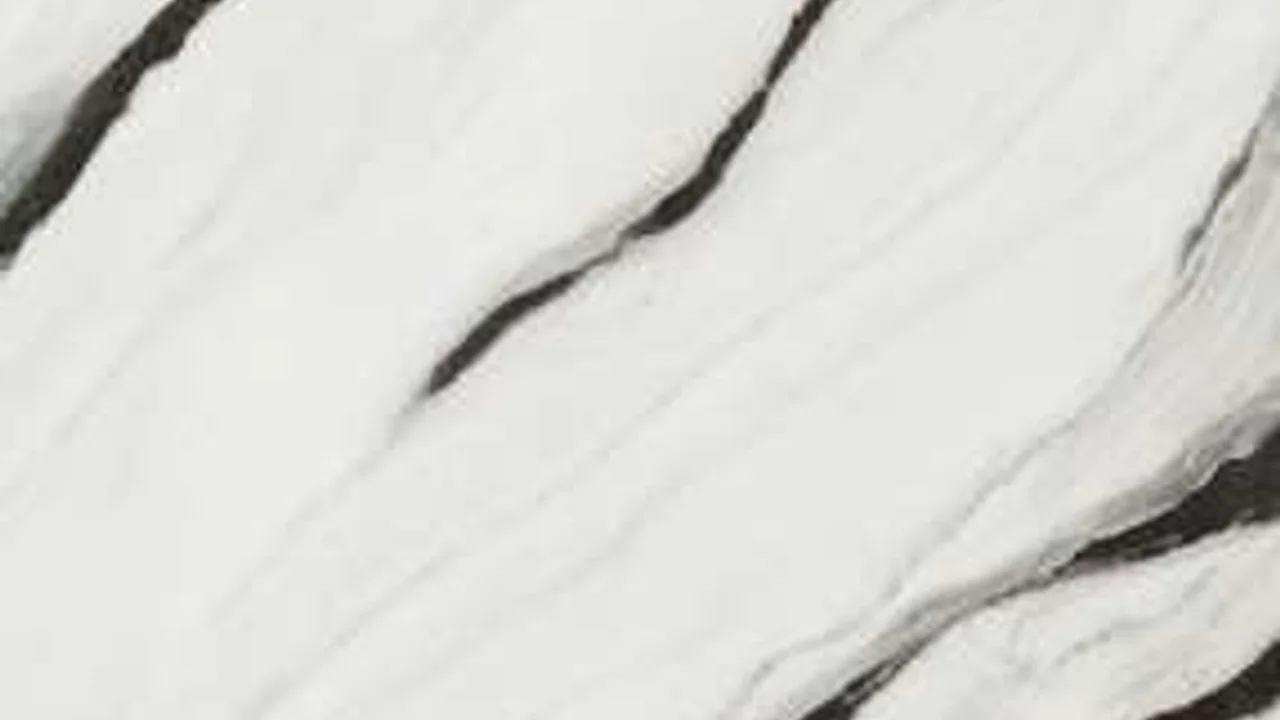
On the Mohs hardness scale, marble sits around 3 and quartzite around 7. A steel knife is about 5.5 — which is why a knife will scratch marble but skate harmlessly across true quartzite. You can see the full range of stones we work with on our materials page.
The one test that decides everything: etching
Here's the part most buyers learn too late. Sealing a stone does not stop etching.
A sealer fills pores and slows staining — coloured liquids soaking in. Etching is different: it's a chemical reaction where acid dissolves a microscopic layer of the calcite surface, leaving a dull, slightly rough mark. Lemon, wine, vinegar, tomato, even a sweating cocktail glass will etch marble through any sealer. It's not a flaw in the stone or the finish — it's chemistry doing exactly what chemistry does to calcium carbonate.
Quartzite has no calcite to react with. The same lemon wedge sits on it like it's sitting on glass. This single fact resolves most "marble vs quartzite" debates the moment a dining table is involved. (For how each stone is best looked after once it's in your home, see our note on caring for natural stone.)
Marble vs quartzite for a dining table
A dining table is the hardest test a stone surface faces in a home: daily food acids, hot dishes, dragged cutlery, children. Here's how the two compare on the things that actually matter at the table.
| Marble | Quartzite | |
|---|---|---|
| Mohs hardness | ~3 (soft) | ~7 (very hard) |
| Etches from food acids? | Yes — through any sealer | No |
| Scratch resistance | Low | High |
| Heat resistance | Good; thermal-shock risk | Excellent |
| Maintenance | Higher; embrace patina | Low |
| The look | Softest, most translucent veining | Marble-like, often more dramatic |
| Best for | Statement & low-contact pieces | Daily-use dining & kitchen |
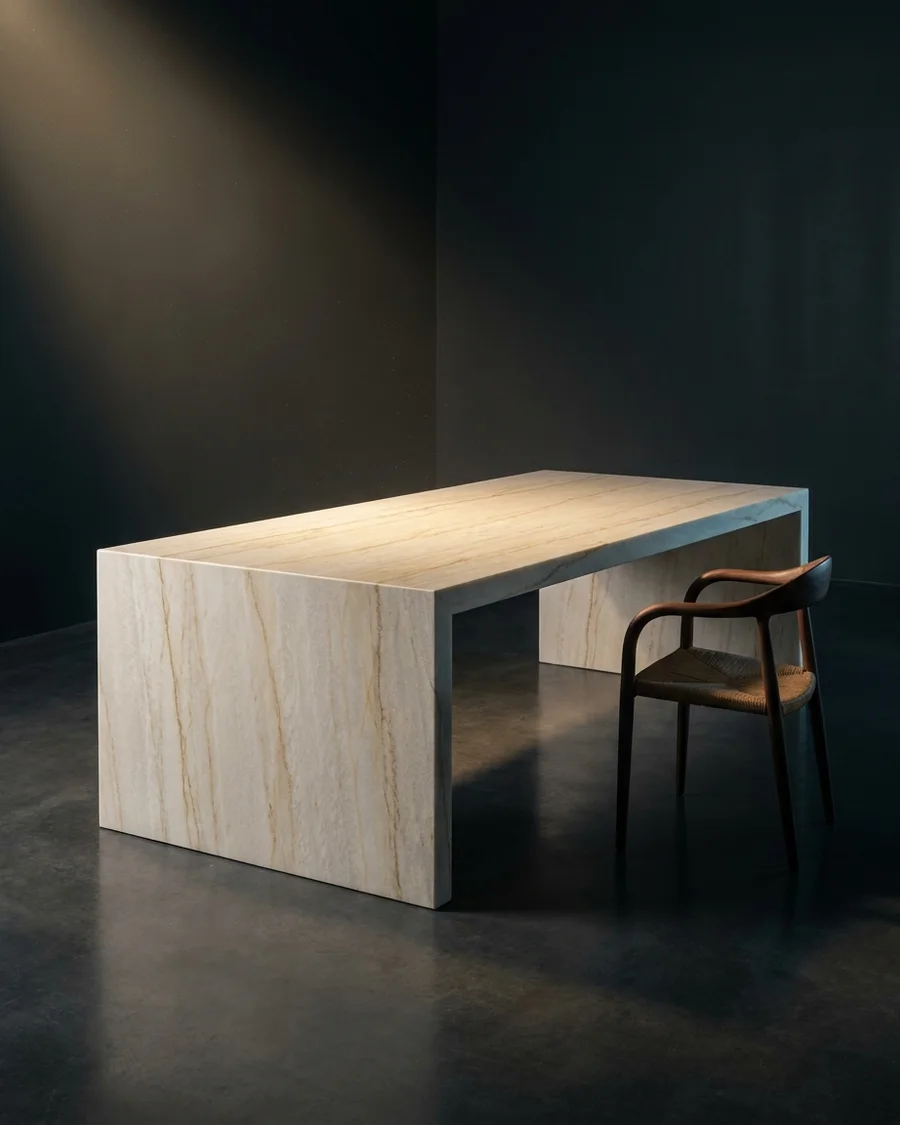
For a table you'll set with wine glasses every week, quartzite is the honest recommendation — it gives you the marble look with the resilience of granite. Our dining tables are most often carved in quartzite for exactly this reason. The Prastha, for instance, is a single monolithic top in Golden Ivory Quartzite — chosen because a dining table earns its scars and quartzite simply doesn't keep them.
When marble is still the right choice
None of this makes marble "worse." Marble is the most beautiful stone humans have ever built with, and there are pieces it's made for:
- Consoles, sideboards, mantels — low-contact surfaces where etching rarely happens.
- Sculptural and ritual pieces — where translucency and the way light enters the stone matter more than wipe-clean practicality.
- Owners who love patina — in much of the world, a lightly etched marble table is read as lived-in, not damaged. If that's your sensibility, marble rewards it for generations.
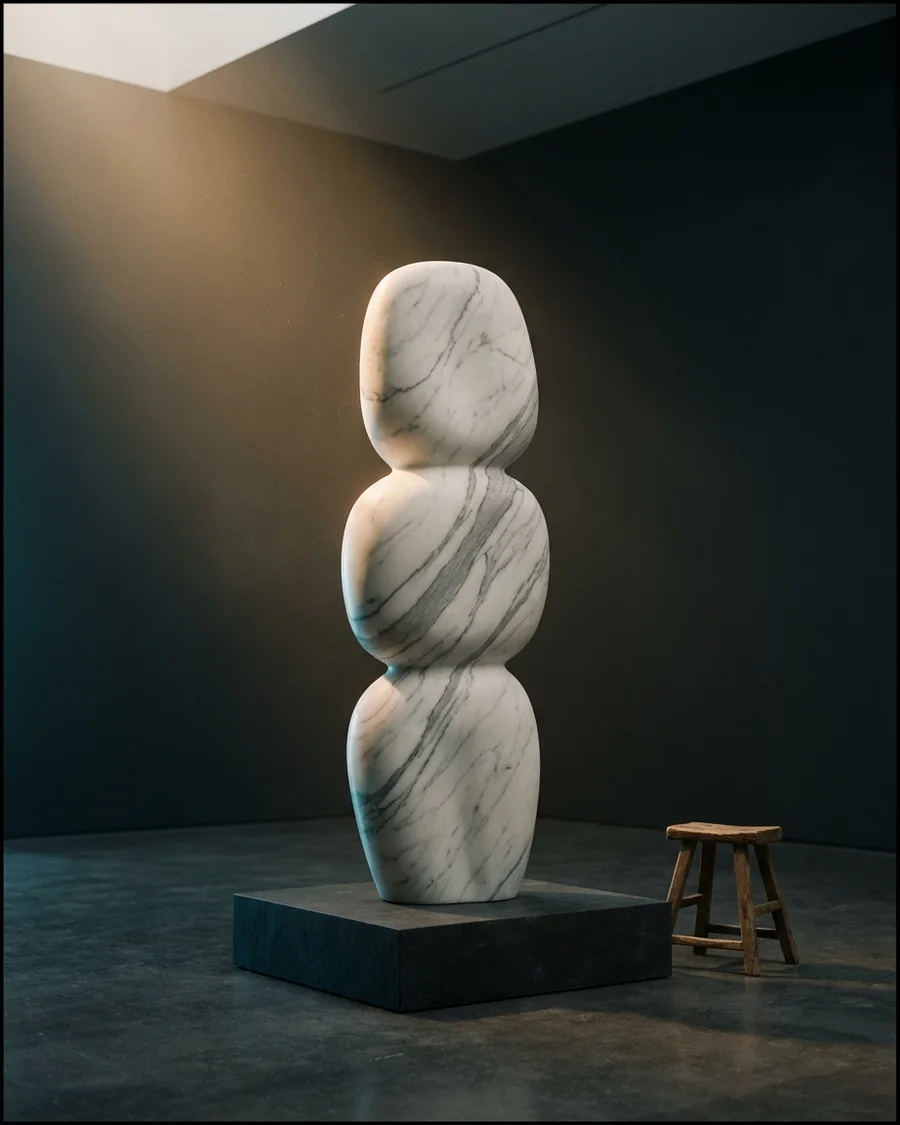
If you're drawn to marble's veining but the piece will see heavy use, that tension is exactly what our guide to choosing your stone is written to resolve.
The buyer's trap: "soft quartzite" and quartz
Two warnings worth more than the price of the stone:
1. "Quartzite" is often mislabelled. A lot of stone sold as quartzite is actually dolomitic marble — softer, and it will etch. The proof is simple: real quartzite won't be scratched by a steel blade, and a drop of acid won't dull it. We test every block, because the label on a slab and the mineral inside it are not always the same thing.
2. Quartzite is not quartz. Quartz surfaces are engineered — natural mineral ground up and bound with resin. Quartzite is 100% natural stone, quarried in single blocks. They share four letters and nothing else.
How we choose at Indic Decor
We carve every piece to order from a single block of natural stone, so the stone choice isn't cosmetic — it's structural, and it's permanent. Our working rule with clients is plain: match the stone to how the piece will live, not just how it looks in a render.
A waterfall dining table for a family of five? Quartzite, every time — like the Vistara or Prastha. A carved console or a sculptural piece that will be admired more than used? Now marble — or one of the warm Indian sandstones like the Dholpur beige in Dhruva — is back on the table. Whichever you choose, the care is straightforward once you know what the stone is.
Imagine It. Visualize It. We Build It.
Not sure which stone?
Tell us the room, the stone you're drawn to, and how the piece will be used — and we'll tell you honestly whether marble or quartzite serves you better before a single block is cut.
Frequently asked questions
Is quartzite better than marble?
Not better — tougher. For daily-use surfaces like dining tables and kitchens, quartzite outperforms marble on hardness, scratch resistance and acid/etch resistance. For low-contact statement pieces where you want the softest veining, marble is often the more beautiful choice.
Does quartzite stain or etch like marble?
True quartzite does not etch, because it contains no calcite for acids to react with. It can stain if left unsealed and exposed to deep-colour liquids for a long time, so a periodic sealer is still sensible — but it won't dull from a splash of wine or lemon the way marble does.
How can I tell real quartzite from marble?
Two field tests: a steel knife won't scratch true quartzite (it will scratch marble), and a drop of mild acid like lemon will dull marble within minutes but leave quartzite unchanged. Much "quartzite" on the market is actually dolomitic marble, so testing the block matters.
Is quartzite the same as quartz?
No. Quartzite is a 100% natural stone quarried in solid blocks. Quartz is an engineered surface — crushed mineral bound with resin. They are different materials with different looks and behaviour.
Which is more expensive, marble or quartzite?
It depends on the specific stone, not the category — a rare marble can cost more than a common quartzite and vice versa. For a made-to-order piece, the block, size and carving usually matter more to the final price than the marble-vs-quartzite distinction itself.